
Working with coastal communities in The Bahamas to restore nature’s ability to protect coastlines, enhance biodiversity, support livelihoods, and provide food security.
The Bahamas harborsmore than 600,000 acres of essential mangrove ecosystems, making it home to one of the largest mangrove areas in the Caribbean.
Restoring the Lungs of the Reef
Also known as the lungs of the reef, mangroves rely on networks of tidal creeks to bring clean ocean water into their waterways, replenishing vital nutrients and removing harmful toxins. Restoring the natural hydrology of mangrove creek systemshas been shown as one of the most effective ways to improve mangrove ecosystem health and ensure that they continue to feed and protect communities in the face of increasing climate risk. The Mangrove Action Project has additional resources on how and why to restore mangrove ecosystems, highlighting that mangrove restoration is more than just planting. In fact, many of the world’s leading experts agree that planting should be a last resort
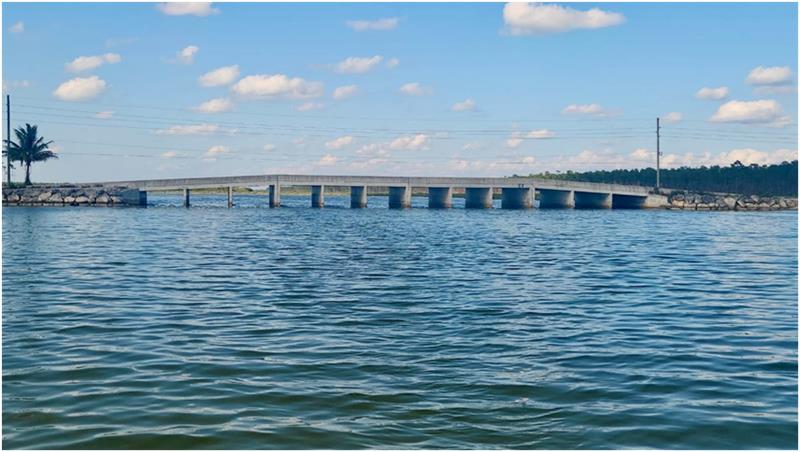
Mangrove creek restoration projects can vary in size and complexity. Small-scale restoration may involve relatively simple solutions, such as clearing debris from existing drainage systems. Medium-sized projects could install or expand culverts or other drainage infrastructure. Larger, more complex projects could involve building ‘flood resistant’ bridges, removing unused roadways, and/or dredging channels to facilitate tidal flow.
Our Plan
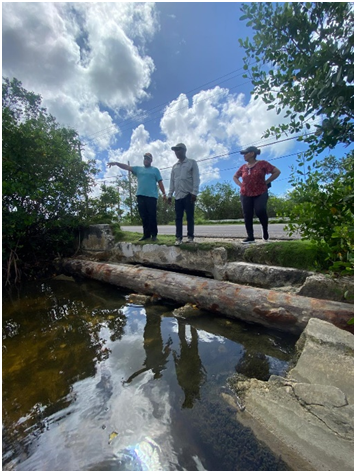
After extensive community consultations and research, we are developing A Roadmap for Restoring Mangrove Creeks in The Bahamas. The roadmap will provide stepwise guidance for holistic restoration of mangrove creeks, including site-specific evaluations of creek restoration benefits and options for unblocking creeks. In early 2026, the project partners plan to put the roadmap into action, launching our first community-led mangrove creek restoration. We encourage others to join in this national effort.
When it comes to mangroves, conservation is the most important strategy for healthy ecosystems. However, for areas that have already been impacted, restoration provides a pathway for the ecosystems and the community to heal, creating a more resilient future for people and planet.
Why Mangroves?
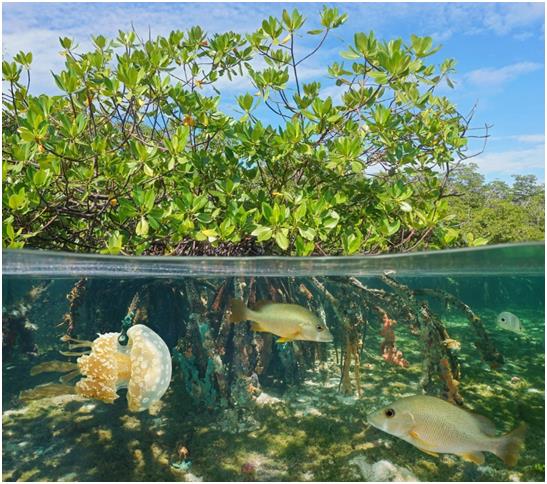
The Bahamas’ mangrove forests teem with life, providing an array of ecosystemservices that benefit both people and nature. Mangroves serve as essential nursery grounds for commercially importantspecies, whichare vital for food security and local employment. Mangroves are also essential toThe Bahamas’ world-renowned fly-fishing sectorand the thousands of local livelihoods it supports.
Mangrovesprovide life-saving protection to coastal communities by dissipating wave energy and reducing coastal erosion, reducing and slowing storm surgeduring hurricanes, and reducing flooding—weather patterns that are expected to intensify with climate change. Additionally, mangroves help mitigate climate change by sequestering carbon dioxide from the atmosphere, making them a crucial ally in the fight against global warming.
The Challenge
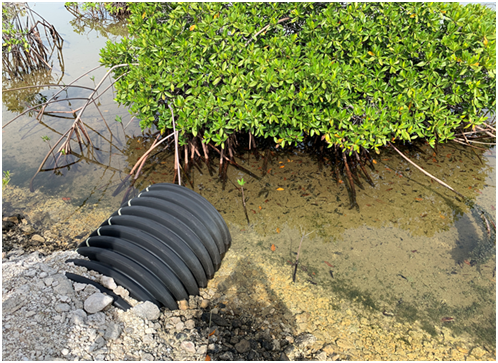
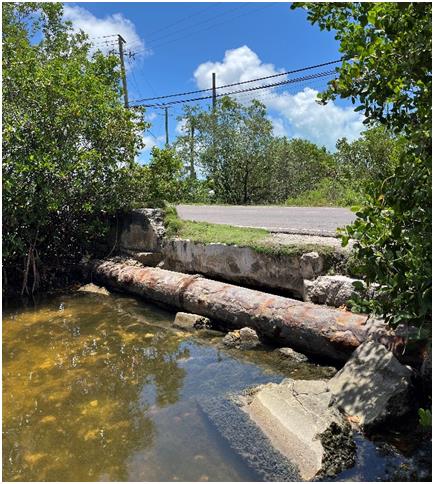
When the flow of tidal creeks is blocked—often by sediment and roadwaysor other infrastructure—mangrove systems become fragmented andlose access to thelife-sustaining influx of ocean water. These ‘blocked creeks’ prevent fish migration and reduce habitat for breeding, feeding, and shelter. Blocked creeks can also increase the risk of flooding, as surging waters and heavy rains are forced to flow over and around blockages, inundating roadways and flooding communities in low lying areas. Additionally, stagnant waterin these areas can become breeding grounds for mosquitoes and harmful algae.
In The Bahamas, the problem is widely felt. Research shows that there are over 100 mangrove creeks that are partially or fully blocked, impeding the flow of tidal waters and threatening the ability of mangroves to provide the myriad of benefits that healthy mangroves ecosystems provideto both people and nature
Centering Solutions around Communities
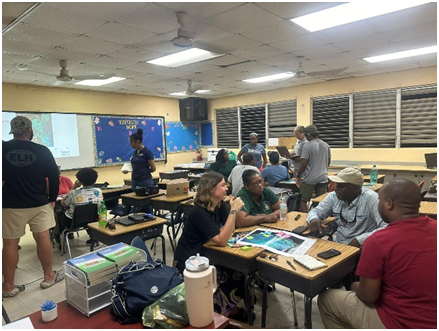
With over 100 creek blockages and limited resources, it’s important to understand the ecological, social, and climate value of different mangrove sites, and prioritize them for restoration based on community guidance. To develop the most durable solutions that benefit people and nature, we have hosted community meetings and worked closely with coastal communities to map the location of blocked mangrove creeks, to identify their priorities for restoration, and co-design solutions. In some areas communities may prioritize restoring creeks that support local livelihoods such as fly-fishing guiding and nature tourism. In other areas, communities may prioritize restoring creeks that often floodbecause of the blockages.
Project Partners


Throughout 2024 and 2025, EDF has led a partnership in The Bahamas with the Ministry of the Environment and Natural Resources (MENR) and the Bahamas’ Forestry Unit, along with the Bahamas Sportfishing Conservation Association, the Perry Institute for Marine Science, and local communities to identify and prioritize creeks for restoration on the islands of Andros, Eleuthera, and New Providence.